




1. Case Overview
Our client was preparing a large-scale apparel transaction involving the manufacture of clothing in China and its export to Africa.
Although the transaction involved multiple countries, the buyer was a Korean national based in Africa, so the parties conducted their negotiations and prepared the contract in Korean.
Because the transaction was worth approximately KRW 1.3 billion, however, even a relatively minor issue involving payment, product quality, or delivery could result in substantial losses.
The parties also needed a contract that clearly reflected the structure of the cross-border transaction and allocated responsibility among the parties involved.
The client therefore sought assistance from Kim & Rhee Law Office in reviewing the transaction structure and preparing the export agreement.
2. Legal Advisory by Kim & Rhee Law Office
(1) Securing Payment and Managing Transaction Risk
One of the most important issues was ensuring that the client could receive payment as agreed.
We reviewed the payment structure and advised the client on measures that could be used to reduce the risk of non-payment, including the use of an appropriate guarantee or surety arrangement.
Rather than relying solely on the buyer’s contractual promise to pay, we structured the transaction so that additional protection could be secured for the substantial amount involved.
(2) Quality Inspection and Claims
Because the apparel was to be manufactured in China and delivered to Africa, the contract needed clear standards for product quality and inspection.
We drafted provisions specifying the inspection process, the timing and method for raising objections, and the parties’ respective responsibilities if defects were discovered.
These provisions were intended to reduce the possibility of disputes over whether the goods complied with the agreed specifications after delivery.
(3) Managing Risks Involving the Chinese Manufacturer
The transaction also involved risks arising from the manufacturing process in China, including production delays, quality issues, and disruptions to the delivery schedule.
We reviewed these risks from the client’s perspective and reflected them in the contractual framework. In particular, the agreement was structured to clarify the parties’ responsibilities if problems at the manufacturing stage affected delivery or product quality.
3. Outcome
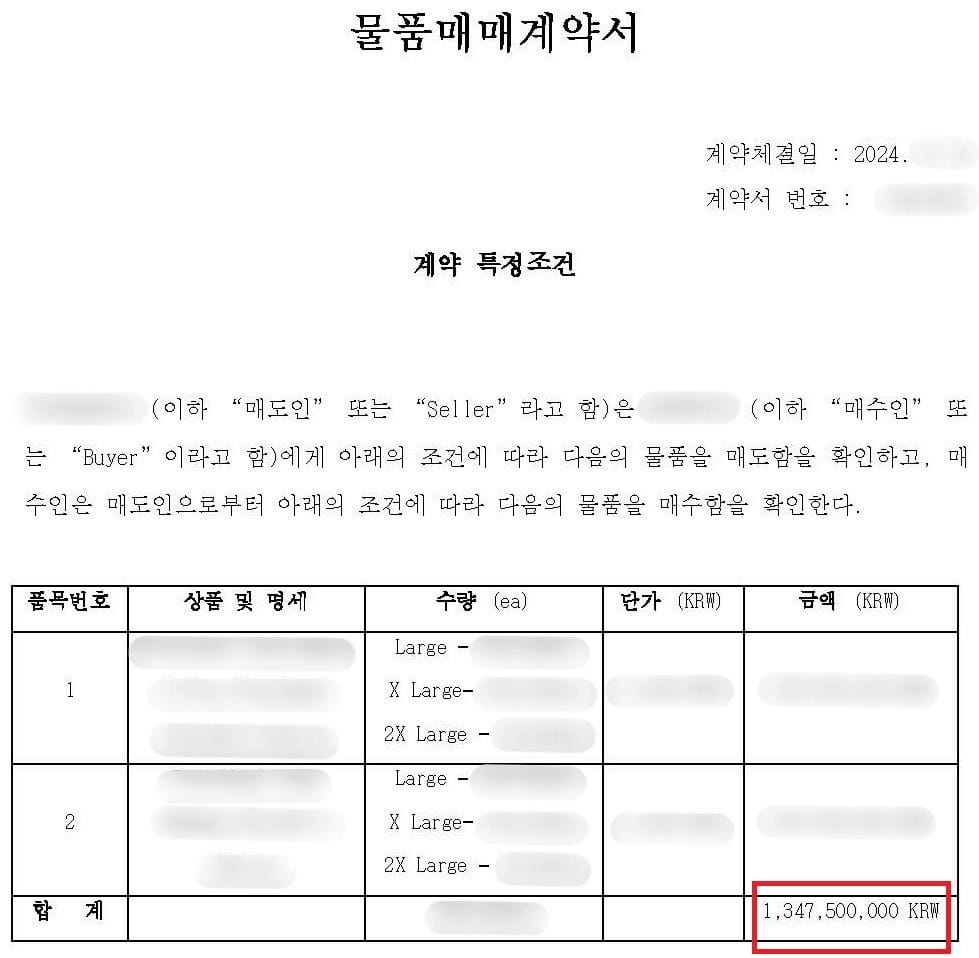
With the contractual structure and key legal risks addressed, the client successfully entered into an apparel export agreement worth approximately KRW 1.3 billion, or about USD 1 million.
Cross-border transactions involving manufacturing in one country and delivery to another require more than simply agreeing on price and quantity.
Payment security, quality standards, inspection procedures, delivery obligations, and responsibility for problems involving overseas manufacturers should all be clearly addressed before the transaction begins.
Kim & Rhee Law Office advises businesses on cross-border transactions, with particular attention to payment security, quality control, delivery obligations, and risks involving overseas manufacturers.